An endangered species is a type of organism that is threatened by extinction. Species become endangered for two main reasons: loss of habitat and loss of genetic variation.
Loss of Habitat
A loss of habitat can happen naturally. Dinosaurs, for instance, lost their habitat about 65 million years ago. The hot, dry climate of the Cretaceous period changed very quickly, most likely because of an asteroid striking the Earth. The impact of the asteroid forced debris into the atmosphere, reducing the amount of heat and light that reached Earth’s surface. The dinosaurs were unable toadapt to this new, cooler habitat. Dinosaurs became endangered, then extinct.
Human activity can also contribute to a loss of habitat.Development for housing, industry, and agriculturereduces the habitat of native organisms. This can happen in a number of different ways.
Development can eliminate habitat and native species directly. In the Amazon rain forest of South America, developers have cleared hundreds of thousands of acres. To “clear” a piece of land is to remove all trees andvegetation from it. The Amazon rain forest is cleared forcattle ranches, logging, and urban use.
Development can also endanger species indirectly. Some species, such as fig trees of the rain forest, may provide habitat for other species. As trees are destroyed, species that depend on that tree habitat may also become endangered. Tree crowns provide habitat in the canopy, or top layer, of a rain forest. Plants such as vines, fungisuch as mushrooms, and insects such as butterflies live in the rain forest canopy. So do hundreds of species of tropical birds and mammals such as monkeys. As trees are cut down, this habitat is lost. Species have less room to live and reproduce.
Loss of habitat may happen as development takes place in a species range. Many animals have a range of hundreds of square kilometers. The mountain lion of North America, for instance, has a range of up to 1,000 square kilometers (386 square miles). To successfully live and reproduce, a single mountain lion patrols this much territory. Urban areas, such as Los Angeles, California, and Vancouver, British Columbia, Canada, grew rapidly during the 20th century. As these areas expanded into the wilderness, the mountain lion’s habitat became smaller. That means the habitat can support fewer mountain lions. Because enormous parts of the Sierra Nevada, Rocky, and Cascade mountain ranges remain undeveloped, however, mountain lions are not endangered.
Loss of habitat can also lead to increased encounters between wild species and people. As development brings people deeper into a species range, they may have more exposure to wild species. Poisonous plants and fungi may grow closer to homes and schools. Wild animals are also spotted more frequently. These animals are simply patrolling their range, but interaction with people can be deadly. Polar bears, mountain lions, and alligators are all predators brought into close contact with people as they lose their habitat to homes, farms, and businesses. As people kill these wild animals, through pesticides, accidents such as collisions with cars, or hunting, native species may become endangered.
Loss of Genetic Variation
Genetic variation is the diversity found within a species. It’s why human beings may have blond, red, brown, or black hair. Genetic variation allows species to adapt to changes in the environment. Usually, the greater the population of a species, the greater its genetic variation.
Inbreeding is reproduction with close family members. Groups of species that have a tendency to inbreed usually have little genetic variation, because no new genetic information is introduced to the group. Disease is much more common, and much more deadly, among inbred groups. Inbred species do not have the genetic variation to develop resistance to the disease. For this reason, fewer offspring of inbred groups survive to maturity.
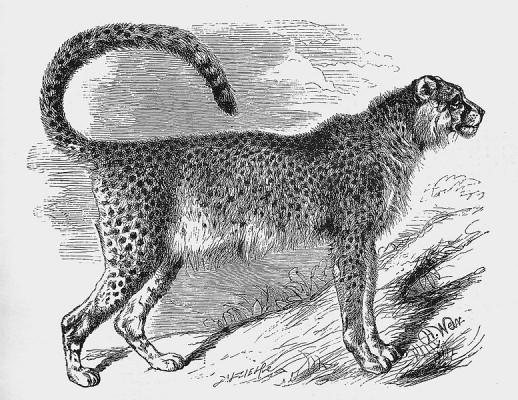
Loss of genetic variation can occur naturally. Cheetahs are a threatened species native to Africa and Asia. Thesebig cats have very little genetic variation. Biologists say that during the last ice age, cheetahs went through a long period of inbreeding. As a result, there are very few genetic differences between cheetahs. They cannot adapt to changes in the environment as quickly as other animals, and fewer cheetahs survive to maturity. Cheetahs are also much more difficult to breed in captivity than other big cats, such as lions.
Human activity can also lead to a loss of genetic variation.Overhunting and overfishing have reduced the populations of many animals. Reduced population means there are fewer breeding pairs. A breeding pair is made up of twomature members of the species that are not closely related and can produce healthy offspring. With fewer breeding pairs, genetic variation shrinks.
Monoculture, the agricultural method of growing a singlecrop, can also reduce genetic variation. Modern agribusiness relies on monocultures. Almost all potatoescultivated, sold, and consumed, for instance, are from a single species, the Russet Burbank. Potatoes, native to the Andes Mountains of South America, have dozens of natural varieties. The genetic variation of wild potatoes allows them to adapt to climate change and disease. For Russet Burbanks, however, farmers must use fertilizers and pesticides to ensure healthy crops because the plant has almost no genetic variation.
Plant breeders often go back to wild varieties to collect genes that will help cultivated plants resist pests and drought, and adapt to climate change. However, climate change is also threatening wild varieties. That means domesticated plants may lose an important source of traits that help them overcome new threats.
The Red List
The International Union for Conservation of Nature (IUCN) keeps a “Red List of Threatened Species.” The Red Listdefines the severity and specific causes of a species’ threat of extinction. The Red List has seven levels of conservation: least concern, near threatened, vulnerable, endangered, critically endangered, extinct in the wild, and extinct. Each category represents a different threat level.
Species that are not threatened by extinction are placed within the first two categories—least concern and near-threatened. Those that are most threatened are placed within the next three categories, known as the threatened categories—vulnerable, endangered, and critically endangered. Those species that are extinct in some form are placed within the last two categories—extinct in the wild and extinct.
Classifying a species as endangered has to do with its range and habitat, as well as its actual population. For this reason, a species can be of least concern in one area, and endangered in another. The gray whale, for instance, has a healthy population in the eastern Pacific Ocean, along the coast of North and South America. The population in the western Pacific, however, is critically endangered.
Least Concern
Least concern is the lowest level of conservation. A species of least concern is one that has a widespread andabundant population. Human beings are a species of least concern, along with most domestic animals, such as dogs and cats. Many wild animals, such as pigeons and houseflies, are also classified as least concern.
Near Threatened
A near threatened species is one that is likely to qualify for a threatened category in the near future.
Many species of violets, native to tropical jungles in South America and Africa, are near threatened, for instance. They have healthy populations, but their rain forest habitat is disappearing at a fast pace. People are cutting down huge areas of rain forest for development and timber. Many violet species are likely to become threatened.
Vulnerable Species
The definitions of the three threatened categories (vulnerable, endangered, and critically endangered) are based on five criteria: population reduction rate, geographic range, population size, population restrictions, and probability of extinction.
Threatened categories have different thresholds for these criteria. As the population and range of the species decreases, the species becomes more threatened.
1) Population reduction rate
A species is classified as vulnerable if its population has declined between 30 and 50 percent. This decline is measured over 10 years or three generations of the species, whichever is longer. A generation is the period of time between the birth of an animal and the time it is able to reproduce. Mice are able to reproduce when they are about one month old. Mouse populations are mostly tracked over 10-year periods. An elephant's generation lasts about 15 years. So, elephant populations are measured over 45-year periods.
A species is vulnerable if its population has declined at least 50 percent and the cause of the decline is known. Habitat loss is the leading known cause of population decline.
A species is also classified as vulnerable if its population has declined at least 30 percent and the cause of the decline is not known. A new, unknown virus, for example, could kill hundreds or even thousands of individuals before being identified.
2) Geographic range
A species is vulnerable if its “extent of occurrence” is estimated to be less than 20,000 square kilometers (7,722 square miles). An extent of occurrence is the smallest area that could contain all sites of a species’ population. If all members of a species could survive in a single area, the size of that area is the species’ extent of occurrence.
A species is also classified as vulnerable if its “area of occupancy” is estimated to be less than 2,000 square kilometers (772 square miles). An area of occupancy is where a specific population of that species resides. This area is often a breeding or nesting site in a species range.
3) Population size
Species with fewer than 10,000 mature individuals are vulnerable. The species is also vulnerable if that population declines by at least 10 percent within 10 years or three generations, whichever is longer.
4) Population restrictions
Population restriction is a combination of population and area of occupancy. A species is vulnerable if it is restricted to less than 1,000 mature individuals or an area of occupancy of less than 20 square kilometers (8 square miles).
5) Probability of extinction in the wild is at least 10 percent within 100 years.
Biologists, anthropologists, meteorologists, and other scientists have developed complex ways to determine a species’ probability of extinction. These formulas calculatethe chances a species can survive, without human protection, in the wild.
Vulnerable Species: Ethiopian Banana Frog
The Ethiopian banana frog (Afrixalus enseticola) is a small frog native to high-altitude areas of southern Ethiopia. It is a vulnerable species because its area of occupancy is less than 2,000 square kilometers (772 square miles). The extent and quality of its forest habitat are in decline. Threats to this habitat include forest clearance, mostly for housing and agriculture.
Vulnerable Species: Snaggletooth Shark
The snaggletooth shark (Hemipristis elongatus) is found in the tropical, coastal waters of the Indian and Pacific Oceans. Its area of occupancy is enormous, from southeast Africa to the Philippines, and from China to Australia.
However, the snaggletooth shark is a vulnerable species because of a severe population reduction rate. Its population has fallen more than 10 percent over 10 years. The number of sharks is declining due to fisheries, especially in the Java Sea and Gulf of Thailand. The snaggletooth shark’s flesh, fins, and liver are considered high-quality foods. They are sold in commercial fish markets, as well as restaurants.
Vulnerable Species: Galapagos Kelp
Galapagos kelp (Eisenia galapagensis) is a type ofseaweed only found near the Galapagos Islands in the Pacific Ocean. Galapagos kelp is classified as vulnerable because its population has declined more than 10 percent over 10 years.
Climate change is the leading cause of decline among Galapagos kelp. El Nino, the natural weather pattern that brings unusually warm water to the Galapagos, is the leading agent of climate change in this area. Galapagos kelp is a cold-water species and does not adapt quickly to changes in water temperature.
Endangered Species
1) Population reduction rate
A species is classified as endangered when its population has declined between 50 and 70 percent. This decline is measured over 10 years or three generations of the species, whichever is longer.
A species is classified as endangered when its population has declined at least 70 percent and the cause of the decline is known. A species is also classified as endangered when its population has declined at least 50 percent and the cause of the decline is not known.
2) Geographic range
An endangered species’ extent of occurrence is less than 5,000 square kilometers (1,930 square miles). An endangered species’ area of occupancy is less than 500 square kilometers (193 square miles).
3) Population size
A species is classified as endangered when there are fewer than 2,500 mature individuals. When a species population declines by at least 20 percent within five years or two generations, it is also classified as endangered.
4) Population restrictions
A species is classified as endangered when its population is restricted to less than 250 mature individuals. When a species’ population is this low, its area of occupancy is not considered.
5) Probability of extinction in the wild is at least 20 percent within 20 years or five generations, whichever is longer.
Endangered Species: Siberian Sturgeon
The Siberian sturgeon (Acipenser baerii) is a large fish found in rivers and lakes throughout the Siberian region of Russia. The Siberian sturgeon is a benthic species. Benthic species live at the bottom of a body of water.
The Siberian sturgeon is an endangered species because its total population has declined between 50 and 80 percent during the past 60 years (three generations of sturgeon). Overfishing, poaching, and dam construction have caused this decline. Pollution from mining activities has also contributed to abnormalities in the sturgeon’sreproductive system.
Endangered Species: Tahiti Reed-warbler
The Tahiti reed-warbler (Acrocephalus caffer) is asongbird found on the Pacific island of Tahiti. It is an endangered species because it has a very small population. The bird is only found on a single island, meaning both its extent of occurrence and area of occupancy are very small.
The Tahiti reed-warbler is also endangered because of human activity. The tropical weed Miconia is a non-native species that has taken over much of Tahiti’s native vegetation. The reed-warbler lives almost exclusively in Tahiti’s bamboo forests. The bird nests in bamboo and feeds on flowers and insects that live there. As development and invasive species such as Miconiadestroy the bamboo forests, the population of Tahiti reed-warblers continues to shrink.
Endangered Species: Ebony
Ebony (Diospyros crassiflora) is a tree native to the rain forests of central Africa, including Congo, Cameroon, and Gabon. Ebony is an endangered species because many biologists calculate its probability of extinction in the wild is at least 20 percent within five generations.
Ebony is threatened due to overharvesting. Ebony trees produce a very heavy, dark wood. When polished, ebony can be mistaken for black marble or other stone. For centuries, ebony trees have been harvested for furniture and sculptural uses such as chess pieces. Most ebony, however, is harvested to make musical instruments such as piano keys and the fingerboards of stringed instruments.
Critically Endangered Species
1) Population reduction rate
A critically endangered species’ population has declined between 80 and 90 percent. This decline is measured over 10 years or three generations of the species, whichever is longer.
A species is classified as critically endangered when its population has declined at least 90 percent and the cause of the decline is known. A species is also classified as endangered when its population has declined at least 80 percent and the cause of the decline is not known.
2) Geographic range
A critically endangered species’ extent of occurrence is less than 100 square kilometers (39 square miles). A critically endangered species’ area of occupancy is estimated to be less than 10 square kilometers (4 square miles).
3) Population size
A species is classified as critically endangered when there are fewer than 250 mature individuals. A species is also classified as critically endangered when the number of mature individuals declines by at least 25 percent within three years or one generation, whichever is longer.
4) Population restrictions
A species is classified as critically endangered when its population is restricted to less than 50 mature individuals. When a species’ population is this low, its area of occupancy is not considered.
5) Probability of extinction in the wild is at least 50 percent within 10 years or three generations, whichever is longer.
Critically Endangered Species: Bolivian Chinchilla Rat
The Bolivian chinchilla rat (Abrocoma boliviensis) is arodent found in a small section of the Santa Cruz region of Bolivia. It is critically endangered because its extent of occurrence is less than 100 square kilometers (39 square miles).
The major threat to this species is loss of its cloud foresthabitat. People are clearing forests to create cattle pastures.
Critically Endangered Species: Transcaucasian Racerunner
The Transcaucasian racerunner (Eremias pleskei) is a lizard found on the Armenian Plateau, located in Armenia, Azerbaijan, Iran, and Turkey. The Transcaucasian racerunner is a critically endangered species because of a huge population decline, estimated at more than 80 percent during the past 10 years.
Threats to this species include the salination, or increased saltiness, of soil. Fertilizers used for agricultural development seep into the soil, increasing its saltiness. Racerunners live in and among the rocks and soil, and cannot adapt to the increased salt in their food and shelter. The racerunner is also losing habitat as people create trash dumps on their area of occupancy.
Critically Endangered Species: White Ferula Mushroom
The white ferula mushroom (Pleurotus nebrodensis) is a critically endangered species of fungus. The mushroom is critically endangered because its extent of occurrence is less than 100 square kilometers (39 square miles). It is only found in the northern part of the Italian island of Sicily, in the Mediterranean Sea.
The leading threats to white ferula mushrooms are loss of habitat and overharvesting. White ferula mushrooms are agourmet food item. Farmers and amateur mushroom hunters harvest the fungus for food and profit. The mushrooms can be sold for up to $100 per kilogram (2.2 pounds).
Extinct In The Wild
A species is extinct in the wild when it only survives in cultivation (plants), in captivity (animals), or as a population well outside its established range. A species may be listed as extinct in the wild only after years of surveys have failed to record an individual in its native or expected habitat.
Extinct in the Wild: Scimitar-horned Oryx
The scimitar-horned oryx (Oryx dammah) is a species ofantelope with long horns. Its range extends across northern Africa. The scimitar-horned oryx is listed as extinct in the wild because the last confirmed sighting of one was in 1988. Overhunting and habitat loss, including competition with domestic livestock, are the main reasons for the extinction of the oryx’s wild population.
Captive herds are now kept in protected areas of Tunisia, Senegal, and Morocco. Scimitar-horned oryxes are also found in many zoos.
Extinct in the Wild: Black Soft-shell Turtle
The black soft-shell turtle (Nilssonia nigricans) is a freshwater turtle that exists only in one man-made pond, at the Baizid Bostami Shrine near Chittagong, Bangladesh. The 150 to 300 turtles that live at the pond rely entirely on humans for food. Until 2000, black soft-shell turtles lived throughout the wetlands of the Brahmaputra River, feeding mostly on freshwater fish.
Unlike other animals that are extinct in the wild, black soft-shell turtles are not found in many zoos. The shrine’s caretakers do not allow anyone, including scientists, to take the turtles. The reptiles are considered to be the descendants of people who were miraculously turned into turtles by a saint during the 13th century.
Extinct in the Wild: Mt. Kaala Cyanea
The Mt. Kaala cyanea (Cyanea superba) is a large, flowering tree native to the island of Oahu, in the U.S. state of Hawaii. The Mt. Kaala cyanea has large, broad leaves and fleshy fruit. The tree is extinct in the wild largely because of invasive species. Non-native plants crowded the cyanea out of its habitat, and non-native animals such as pigs, rats, and slugs ate its fruit more quickly than it could reproduce.
Mt. Kaala cyanea trees survive in tropical nurseries andbotanical gardens. Many botanists and conservationists look forward to establishing a new population in the wild.
Extinct
A species is extinct when there is no reasonable doubt that the last remaining individual of that species has died.
Extinct: Cuban Macaw
The Cuban macaw (Ara tricolor) was a tropical parrotnative to Cuba and a small Cuban island, Isla de la Juventud. Hunting and collecting the birds for pets led to the bird’s extinction. The last specimen of the Cuban macaw was collected in 1864.
Extinct: Ridley’s Stick Insect
Ridley’s stick insect (Pseudobactricia ridleyi) was native to the tropical jungle of the island of Singapore. This insect, whose long, segmented body resembled a tree limb, is only known through a single specimen, collected more than 100 years ago. During the 20th century, Singapore experienced rapid development. Almost the entire jungle was cleared, depriving the insect of its habitat.
Extinct: Sri Lankan Legume Tree
The Sri Lankan legume tree (Crudia zeylanica), native only to the island of Sri Lanka in the Indian Ocean, was a giant species of legume. Peas and peanuts are smaller types of legumes.
Habitat loss from development in the 20th century is the main reason the tree went extinct in the wild. A single specimen survived at the Royal Botanical Garden in Peradeniya, Sri Lanka, until 1990, when that, too, was lost.
Endangered Species and People
When a species is classified as endangered, governments and international organizations can work to protect it. Laws may limit hunting and destruction of the species’ habitat. Individuals and organizations that break these laws may face huge fines. Because of such actions, many species have recovered from their endangered status.
The brown pelican was taken off the endangered species list in 2009, for instance. This seabird is native to the coasts of North America and South America, as well as the islands of the Caribbean Sea. It is the state bird of the U.S. state of Louisiana. In 1970, the number of brown pelicans in the wild was estimated at 10,000. The bird was classified as vulnerable.
During the 1970s and 1980s, governments and conservation groups worked to help the brown pelican recover. Young chicks were reared in hatching sites, then released into the wild. Human access to nesting sites was severely restricted. The pesticide DDT, which damaged the eggs of the brown pelican, was banned. During the 1980s, the number of brown pelicans soared. In 1988, the IUCN “delisted” the brown pelican. The bird, whose population is now in the hundreds of thousands, is now in the category of least concern.


 Indian Aurochs: The Indian Aurochs once lived in the hot and dry areas of India. The huge wild cattle was larger than most modern domestic cattle with height of 6.6 ft and weight of 1,000 kilograms. The Indian bison or The gaur is the largest species of wild cattle found in India.zebu and gaur are the Indian cattle, who are quite similar to the extinct wild Indian Aurochs. Extinct type of cattle was the most challenging hunting wild animal like the wild water buffalo and wild boar.
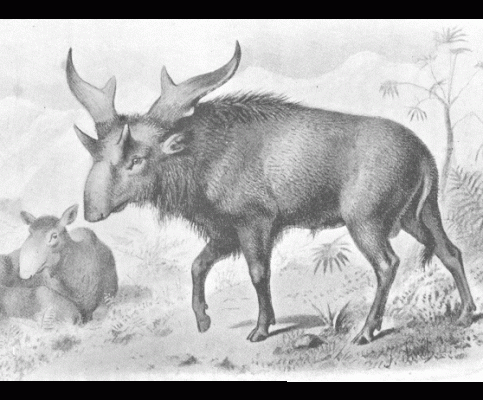
 Sivatherium: Sivatherium was a very large approximately 7ft tall extinct animal found in India. The giant beasts was first discovered in India, where it was called as “Sivatherium” due to the Hindu God Lord Shiva. The Sivatheres were the tallest and fastest monsters found in India ever.
 Sumatran Rhinoceros: The Sumatran Rhinoceros has been
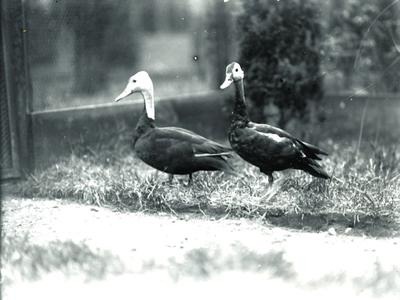
 Pink-Headed Duck: Pink-headed Duck was a large diving blackish-brown duck,It was one of the most beautiful bird in India. The long-necked duck once found in throughout India,But it’s beautiful appearance made it most hunted birds in India, Due to access of hunting this beautiful bird is fall in the category of extinct birds in India. There is hope that the critically endangered species could still survive in some part of India our neighbor countries.